

Corrosion Resistant Coating Applications
Thermal spray coating solutions for components exposed to corrosive industrial environments, oxidation and chemical attack.
APT supports corrosion resistant coating applications according to industrial environments and component service conditions. We help customers review coating systems for anti-corrosion protection, surface stability and longer component life.
Why Corrosion Protection Matters
Corrosion resistant coating applications often begin with moisture, oxidation, chemicals or aggressive service environments. Corrosion can attack exposed surfaces, weaken functional areas, increase maintenance frequency and cause premature component replacement.
The right thermal spray corrosion protection approach depends on the media, temperature, exposure pattern and component role. Atmospheric corrosion, wet process corrosion, oxidation and chemical contact each point toward different material and process decisions.
Common Materials for Corrosion Resistant Coatings
Often used for anti corrosion coating work where sacrificial or barrier protection is needed over large metallic surfaces.
Selected when the coating must provide a metallic corrosion-resistant surface with better environmental stability than the substrate.
Useful in industrial corrosion protection coating applications involving chemical exposure, oxidation or demanding process conditions.
Used where ceramic surface behavior may support chemical stability, wear-corrosion balance or functional isolation.
Some environments require a tailored coating stack, finishing requirement or process window based on actual exposure.
APT can discuss related thermal spray consumables for corrosion coating programs.
Discuss a Corrosion Protection Requirement
Share the exposure environment, base material, component function and maintenance concern. APT can help evaluate practical anti corrosion thermal spray coating options.
Choosing Arc Spray, HVOF, Plasma Spray or D-Gun
APT supports corrosion-resistant coating selection according to media exposure, operating condition and component function. Coating density, material chemistry and part size all influence the process route.
Important for anti-corrosion metallic coatings and large-area protection, including zinc, aluminum and alloy systems.
Used for denser corrosion-resistant systems where coating integrity and controlled porosity are important.
Suitable for selected ceramic or functional corrosion environments where oxide materials are appropriate.
Considered selectively for special high-performance cases requiring dense coatings and demanding service behavior.
Typical Industries and Components
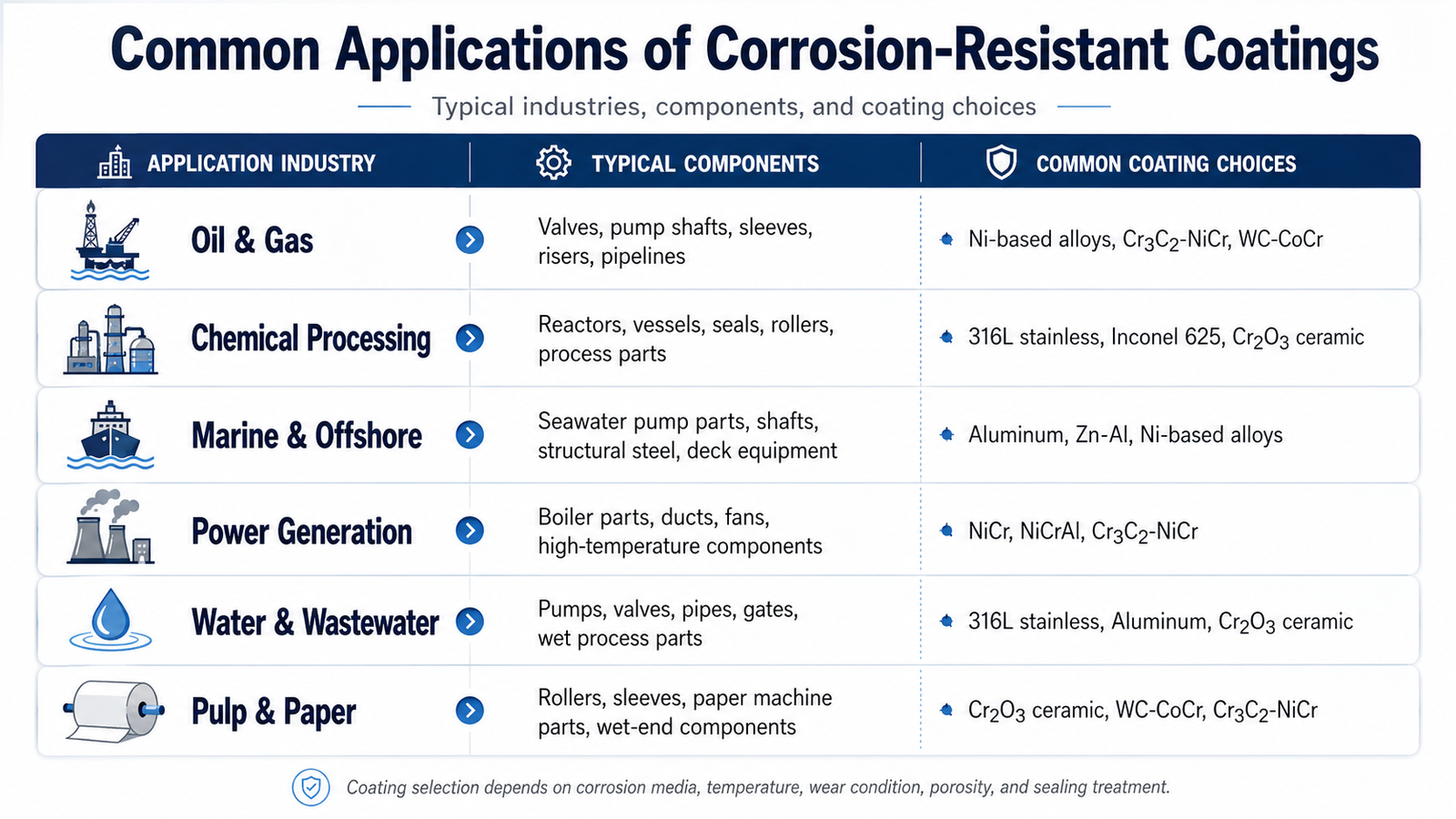
- Oil and gas parts exposed to corrosive fluids, atmosphere or mixed wear-corrosion conditions.
- Chemical processing components requiring a more stable functional surface.
- Energy and power equipment exposed to oxidation or industrial operating environments.
- Marine and corrosive industrial environments where atmospheric attack drives maintenance.
- Pump and valve parts, paper equipment and wet process components.
Environment-Led Coating Support
APT helps connect corrosion exposure, environment and coating system selection according to documented service conditions. This includes reviewing whether the goal is sacrificial protection, barrier performance, oxidation resistance, chemical stability or a combined wear and corrosion solution.
APT also supports coating service planning, thermal spray auxiliary equipment discussions and consumable selection where customers are building or maintaining coating production capability.
Corrosion Resistant Coating Questions
What is a corrosion resistant coating?
A corrosion resistant coating is a protective surface layer used to reduce corrosion, oxidation or chemical attack on industrial components.
Which thermal spray process is used for corrosion protection?
Arc spray is widely used for metallic anti-corrosion coatings, while HVOF and plasma spray may be selected for denser or more specialized corrosion-resistant systems.
What materials are used in anti-corrosion thermal spray coatings?
Typical materials include zinc, aluminum, stainless alloys, nickel-based alloys and selected ceramic or oxide systems.
What industries need corrosion resistant coatings?
Oil and gas, chemical processing, energy, power, marine, paper and wet process industries often require corrosion protection.
Can APT help choose a corrosion protection coating by environment?
Yes. APT reviews media exposure, operating condition, component function and surface requirements to support coating selection.
Where can I return to the Applications Hub?
Use the Back to Thermal Spray Coating Applications link to view related application pages.