
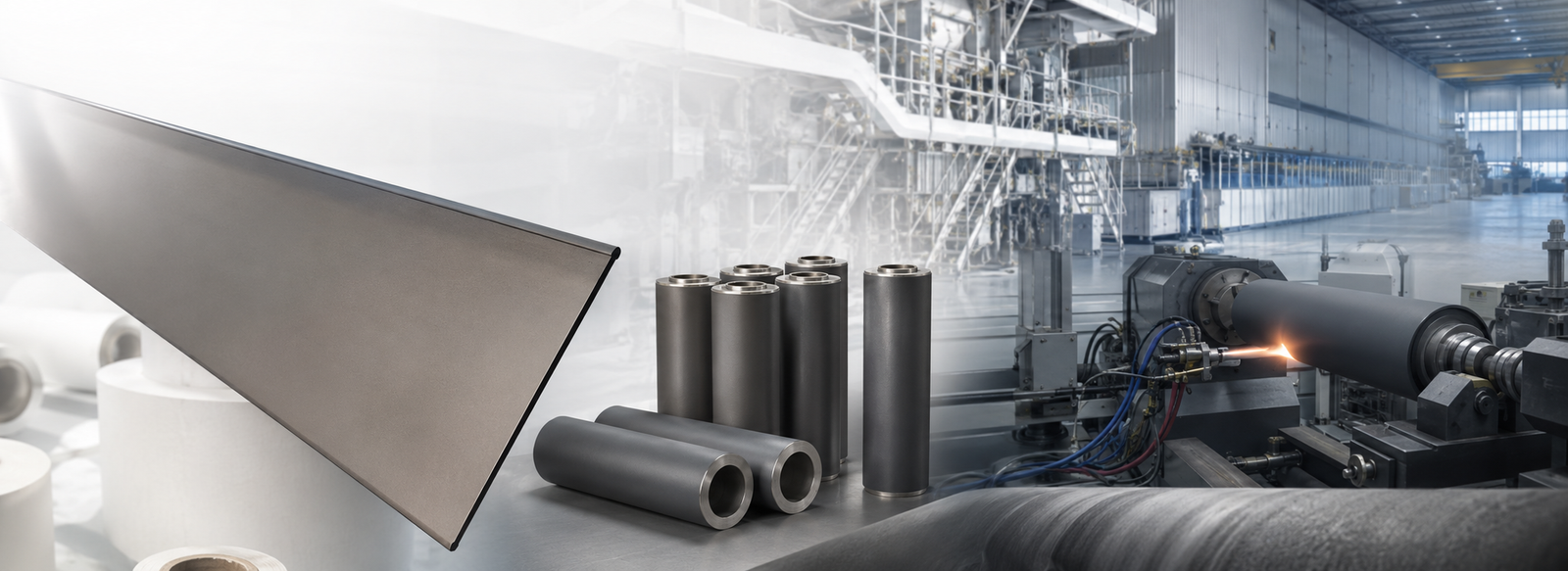
Wear Resistant Coating Applications
Thermal spray coating solutions for abrasion, erosion and sliding wear problems in industrial components.
APT supports wear resistant coating applications based on actual component problems and service conditions. We help customers evaluate coating materials and spray processes for shafts, rollers, sleeves, pump parts and other wear-exposed industrial components.
Why Wear Resistance Matters
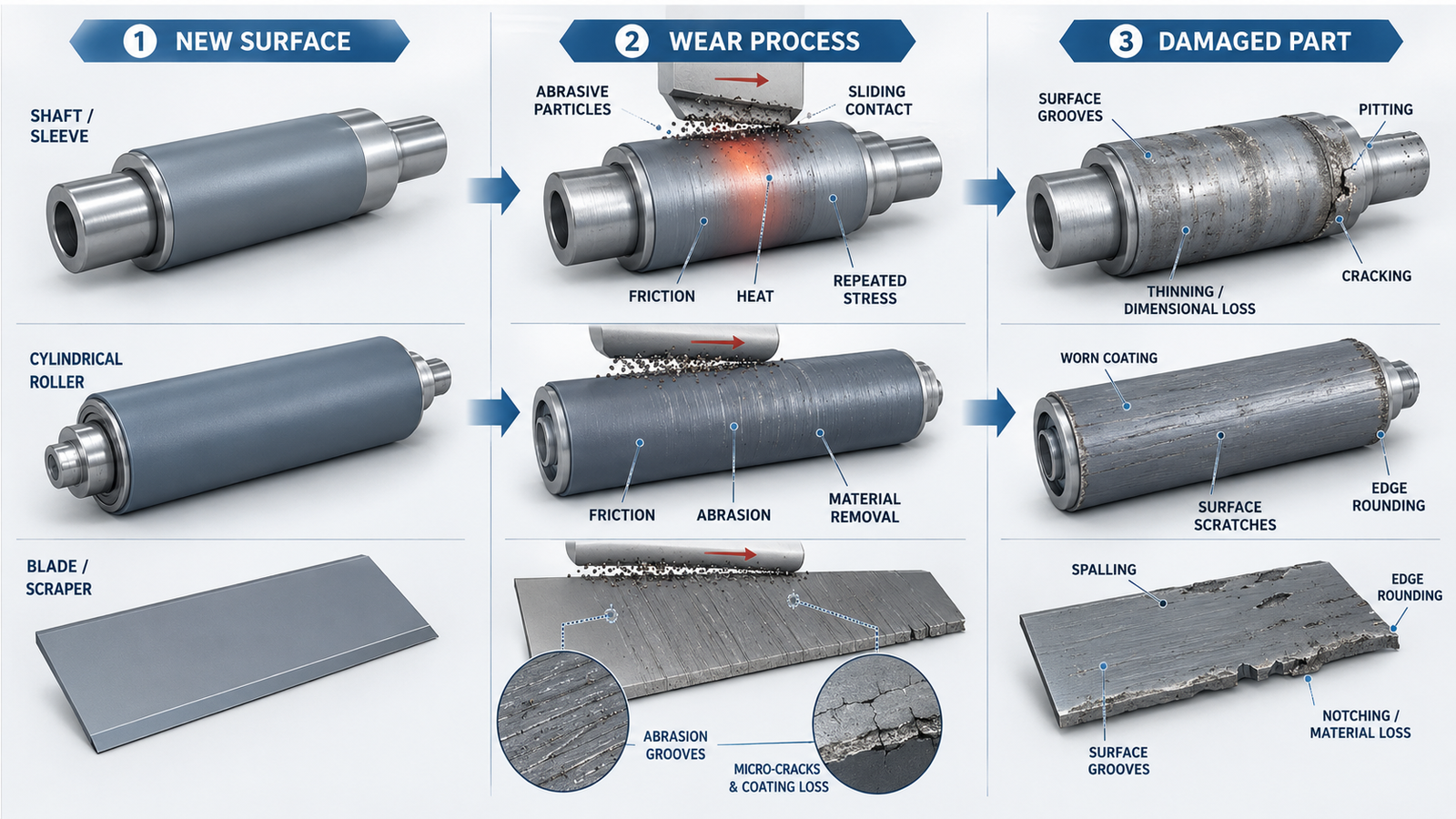
Wear resistant coating applications often begin with abrasion, erosion or sliding wear problems on industrial components. When a shaft, roll, sleeve or pump part loses its working surface, the issue is rarely cosmetic. Clearance changes, sealing surfaces degrade, product quality can drift and unplanned replacement costs increase.
A thermal spray wear protection coating can add a hard, functional surface while allowing the base component to retain its original geometry and mechanical role. The best choice depends on the actual wear mode: hard particle abrasion, erosive flow, metal-to-metal sliding, fretting, impact-assisted wear or a mixed service condition.
Common Coating Materials for Wear Protection
Often selected for severe abrasion, erosion and sliding wear where a dense carbide coating is needed on shafts, sleeves, rollers and pump components.
Useful when wear resistance must be balanced with elevated-temperature stability and corrosion-related exposure in industrial service.
A practical ceramic option for certain sliding, textile, paper and roll applications where a hard oxide surface is required.
Applied where a hard ceramic surface, dimensional restoration or surface function is part of the wear solution.
Some parts need a tailored balance of hardness, roughness, bond strength, coating thickness and finishing method.
APT can also discuss relevant thermal spray consumables for wear coating programs and process planning.
Review a Wear Problem With APT
Share the component type, wear mode, operating environment and target surface performance. APT can help evaluate practical thermal spray coating options for your application.
Choosing HVOF, Plasma Spray, Arc Spray or D-Gun
APT supports wear resistant coating selection according to wear mode, component geometry and service condition. The process is chosen to match coating density, material family, required finish and operating environment.
A common choice for dense carbide wear-resistant coatings, especially tungsten carbide and chrome carbide systems.
Suitable for dense wear-resistant applications requiring high coating integrity on demanding industrial components.
Useful for ceramic wear-related coatings, including chromium oxide and alumina-based systems.
Used more selectively for wear applications, often where metallic build-up or large-area economics are relevant.
Typical Industries and Components
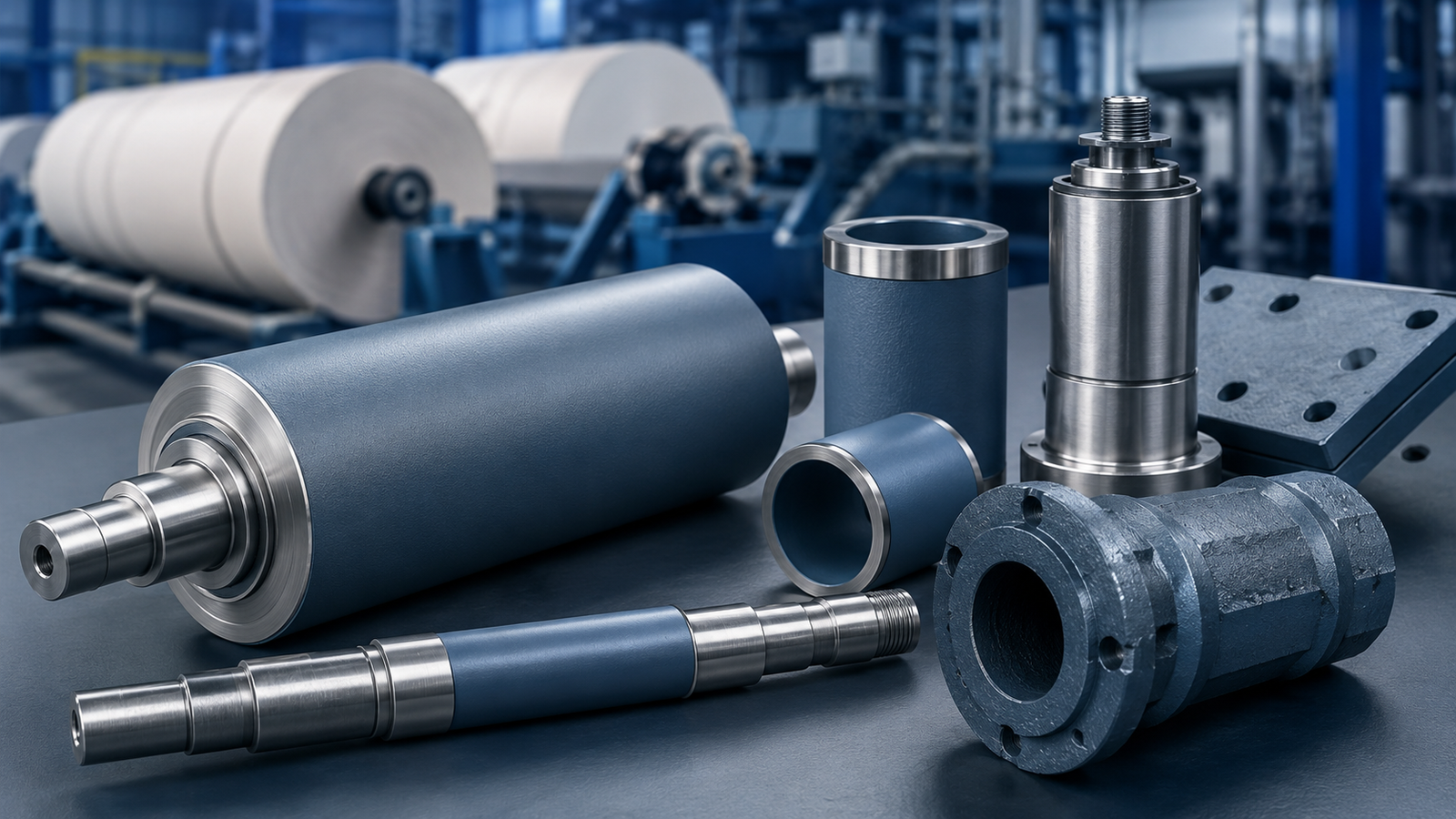
- Machinery and general engineering components exposed to repeated contact or abrasive media.
- Paper rolls and industrial rollers requiring controlled surface life and finish.
- Pump parts, sleeves, plungers and sealing surfaces exposed to slurry or particle wear.
- Shafts and sleeves where dimensional loss creates operating or maintenance problems.
- Mining and heavy wear components where replacement downtime is costly.
Application Support Beyond a Coating Name
Wear coating decisions are strongest when they connect the wear mode, material system and process selection. APT helps customers describe the contact condition, media, temperature, geometry and finishing requirement before recommending a coating route.
For buyers and engineers, this means the inquiry can move from "we need a harder surface" to a practical discussion of coating material, process, coating thickness, finishing, masking and production support. APT can also support related thermal spray auxiliary equipment needs for production environments.
Wear Resistant Coating Questions
What is a wear resistant coating?
A wear resistant coating is a functional surface layer used to reduce material loss from abrasion, erosion, sliding contact or mixed wear conditions.
Which thermal spray process is commonly used for wear resistance?
HVOF is commonly used for dense carbide wear resistant thermal spray coating systems. Plasma spray and D-Gun are also important depending on material and service condition.
What materials are used in wear resistant coatings?
Common options include tungsten carbide, chrome carbide, chromium oxide, alumina-based ceramics and custom wear protection coating systems.
What components often need wear resistant coating?
Shafts, rollers, sleeves, pump parts, paper rolls, mining parts and industrial wear components are frequent candidates.
Can APT help choose a wear resistant coating by application?
Yes. APT reviews wear mode, component geometry, surface condition and operating environment to support coating selection.
Where can I return to the Applications Hub?
Use the Back to Thermal Spray Coating Applications link to view related application pages.